
Processing a single bank statement isn’t too much of a challenge. Even manual entry can seem simple when just one PDF file is involved.
Divide this task into numerous companies, several banks and various statement periods.
The issue evolves. The issue changes. It’s not just about making it easier to convert bank statements for bookkeeping and accounting companies. It’s about implementing a system that works even when the volume increases.
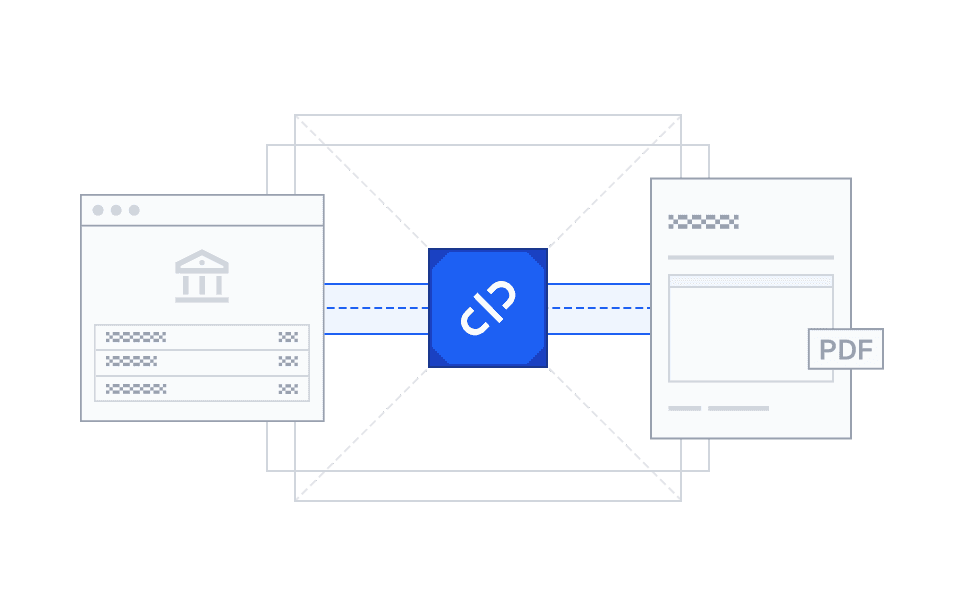
Image credit: docubrew.com
The bottleneck is repetition.
Imagine that an accounting company receives PDFs every month from multiple clients. One client is sending statements from Chase one, another Wells Fargo and others Bank of America, Capital One or Citi.
Opening each PDF and manually entering each transaction is a process of repeating the same mechanical work again and again.
A bank statement converter can modify the workflow to ensure that it’s not the transcription process but the review. Docubrew extracts the transaction figures directly from bank statements instead of using estimates for financial values. This results in a structured file that can be examined prior to its use. This feature is more important when the number of documents increase.
The process of batch processing alters the equation
It may make sense to convert files manually infrequently. Accounting firms typically encounter a different set of challenges. Docubrew allows you to process multiple statements in one go. The results are accessible on a separate basis. The firm can work with a large number of documents provided by clients without needing to manually recreate each transaction table.
Customers can convert bank statements to CSV format and then review the transaction data.
Scanned paper statements aren’t automatically excluded either. Docubrew comes with OCR for PDFs that have been scanned, which is useful if your client’s historical records comprise a mixture of native PDFs and scanned documents.
Make outputs to support the accounting work in the future.
The process of conversion isn’t over. The transaction must be sent to somewhere.
Docubrew can export CSV as well as Excel. QBO has an output format for teams that require to transfer bank account statement to Quickbooks.
Firms that regularly convert bank statements to Quickbooks can build a more consistent process around receiving statements, processing them, checking the extracted data, and preparing the appropriate files for the accounting workflow.
Human reviews are still crucial. Automation is able to eliminate repetitive transcription, but bookkeepers are still responsible for reviewing financial information and completing the accounting task properly.
Client Data Should Have Its Own Workflow Decision
The handling of sensitive client data is associated with higher document volumes.
Docubrew offers two processing approaches. Windows desktop software performs conversions locally. The converted files are stored on the computer. Cloud-based options include encrypted uploads and Docubrew states that converted and uploaded files are automatically deleted within 24 hours.
Accounting practices may choose the approach that best fits their internal needs.
Scale the process, not the repetitive work
A growing bookkeeping practice will be expecting more financial documents. This should not mean that it automatically allows additional copy and paste tasks.
The most important thing to consider is whether the method that has worked with five clients will work for 50.
In standardizing the manner in which statements are processed, converted, reviewed, and prepared for accounting software, firms can build a workflow designed to handle recurring volumes instead of considering every PDF as an entirely new manual project.